Idle No More and the Evolution of Indigenous Statecraft

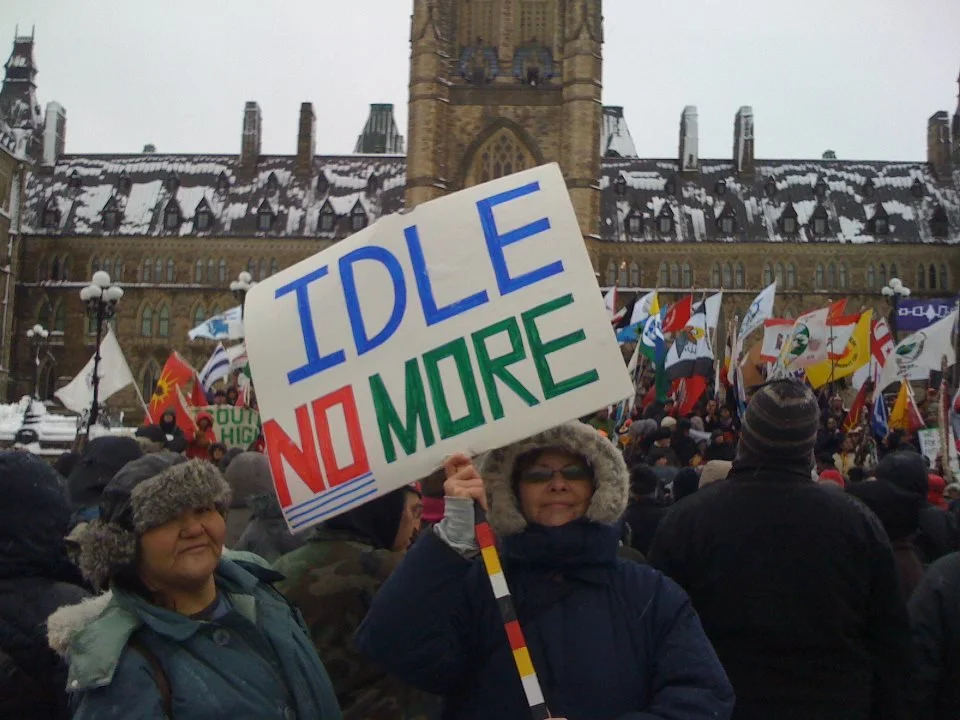
IdleNoMore March in 2013
In 2013, the Idle No More movement erupted across Canada. It was my first experience with mass Indigenous mobilization. I remember standing in the freezing January air alongside fellow students and community members as we danced round dances in shopping malls and public spaces and others blockaded roads, railways, and border crossings. Many of us were students at Thompson Rivers University, and we were angry. The federal government had just tabled omnibus Bills C‑38 and C‑45. Bill C‑38 repealed the Canadian Environmental Assessment Act and weakened fish habitat protections under the Fisheries Act, while Bill C‑45 “gutted the Navigable Waters Protection Act”. Idle No More activists argued that the 400‑page Jobs and Growth Act amended more than 60 pieces of legislation, including the Indian Act and environmental laws, making it easier for governments and corporations to push through resource projects without proper consultation. We were told these changes would “streamline” development; instead, they threatened our lands and undermined Indigenous sovereignty.
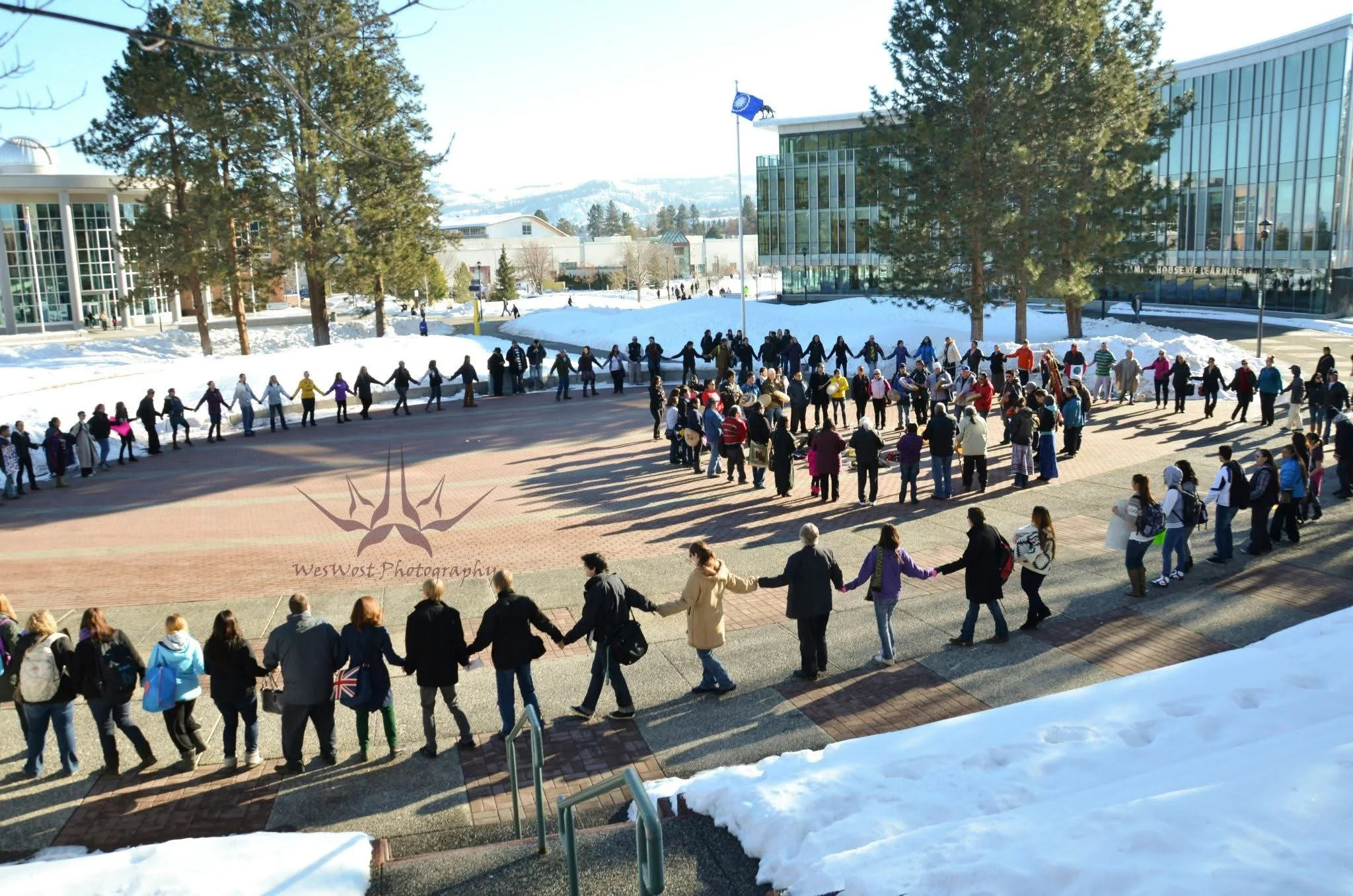
Student Organized IdleNoMore Rounddance
The power of direct action
Idle No More was not simply a series of protests. It was a declaration that Indigenous peoples would no longer remain silent while their rights were stripped away. The movement’s founders organized teach‑ins, flash‑mob round dances and peaceful blockades across Canada and around the world. On 28 January 2013, the Idle No More World Day of Action saw about 50 demonstrations in Canada, the United States and Europe. Media attention forced the government to meet with First Nations leaders and highlighted how budget bills could be used to avoid meaningful consultation.
Direct action was also alive on campus. As a member of the university’s Board of Governors, I relayed student concerns to administrators. We demanded culturally safe spaces and mentorship programs. Our actions weren’t always polite; we shut down intersections, held demonstrations and organized teach‑ins. Our university eventually created award‑winning mentorship programs and new Indigenous student spaces. It showed that strategic confrontation can spark institutional change.
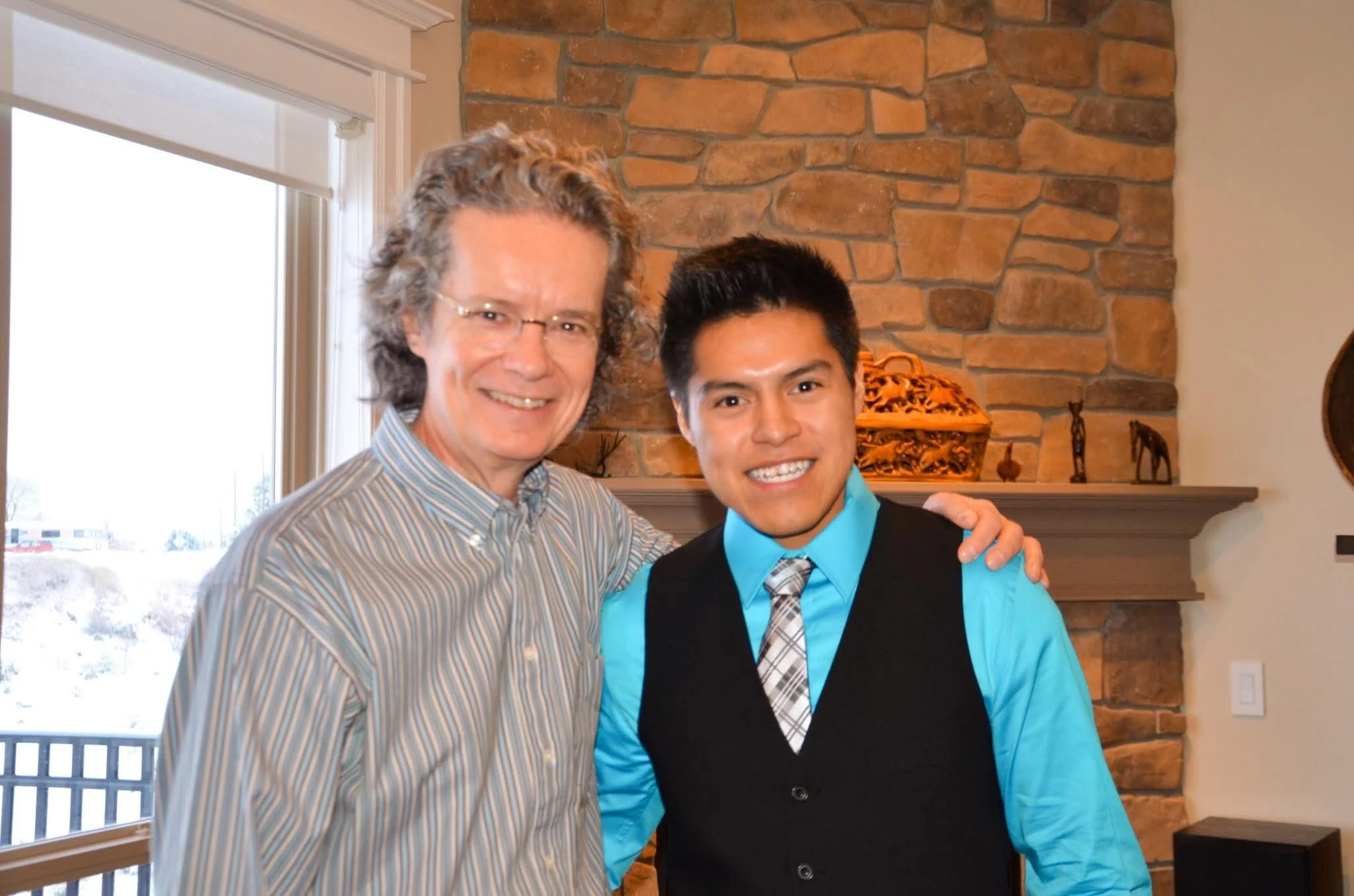
With the President of TRU
Indigenous statecraft: from confrontation to certainty
My recent research on Indigenous statecraft explores how Indigenous nations combine diplomacy, legal strategy and direct conflict to achieve lasting recognition. Decades of political, legal and constitutional activism have given Indigenous peoples “unprecedented power and authority” in Canada. This power has been forged through a combination of strategies:
Litigation: Landmark Supreme Court cases such as Delgamuukw v. British Columbia (1997) and Tsilhqot’in Nation v. British Columbia (2014) recognized that Aboriginal title pre‑dated European sovereignty and confirmed that title includes the right to decide how lands are used. In Delgamuukw, the Court held that Wet’suwet’en and Gitxsan Aboriginal title had not been extinguished but declined to issue a declaration of title and encouraged negotiations. Two decades later, Tsilhqot’in produced the first declaration of Aboriginal title to a specific tract of land, reinforcing that Aboriginal title is a collective right to the land itself.
Negotiation and diplomacy: The federal government’s response to Idle No More and subsequent court decisions has been to revise legislation and engage in negotiation. In 2019 the Navigation Protection Act was amended and renamed the Canadian Navigable Waters Act. Transport Canada notes that the new Act seeks to “restore lost protections for the public right to navigate on all navigable waters in Canada” and explicitly requires decision‑makers to consider Indigenous knowledge and rights.
Direct conflict: Direct action often precipitates negotiation. In early 2020 hereditary chiefs from the Wet’suwet’en Nation and supporters blockaded rail lines and highways across Canada to oppose the Coastal GasLink pipeline. The protests forced Canada and British Columbia back to the table. In May 2020, the parties signed a Memorandum of Understanding that immediately recognized that Wet’suwet’en rights and title are held by their house groups under their own governance system and committed to negotiate legal recognition of their title and jurisdiction. As Al Jazeera reported, the agreement acknowledges that the Wet’suwet’en title covers about 22,000 km² and flows from a Supreme Court finding that their title had never been extinguished.
Another important example comes from Haida Gwaii. In 1985, Haida Elders and community members blocked a logging road on Lyell Island to stop clearcutting. Dozens were arrested, but the blockade forced negotiations with Canada and eventually led to the creation of the Gwaii Haanas National Park Reserve. The Haida Nation continued to press its rights in court and at the negotiating table, turning that conflict into co‑management agreements and, in 2024, the “Rising Tide” Haida Title Lands Agreement. The provincial fact sheet explains that the agreement recognizes Haida Aboriginal title across Haida Gwaii and sets out a process for reconciling Haida and provincial laws. By demonstrating that direct action can open the door to negotiation and eventual legal recognition, the Haida experience underscores how confrontation can lead to lasting certainty.
This trajectory, from protest and blockades to negotiations and legal recognition, illustrates how direct conflict can be a pathway to legal certainty. Indigenous statecraft is not about chaos; it is a deliberate strategy to secure recognition of ancestral authority and to force governments to honour their constitutional obligations.
Justin Trudeau visits Secwepemc Nation Chiefs while running for Leadership in 2013
Lessons from Canim Lake: asserting jurisdiction over forests
Within my own community, direct action has long been a tool for exercising our jurisdiction. More than a decade ago, elders at Canim Lake (Tsq’éscen’) saw logging companies clear‑cutting forests after the mountain pine beetle epidemic. They designated the area around the lake a Key Interest Area and informed licensees and BC Timber Sales that logging would no longer be permitted within it. When a company attempted to ribbon a cut‑block inside the protected area, community members removed the ribbons and delivered them to the mill in a trash bag. This confrontational tactic worked. Our nation became the only First Nation in the province to develop its own Forest Stewardship Plan, rather than piggybacking on a major licensee’s plan. The plan now guides how the forest is managed and harvested directly reflecting our Tsq’escen’ and Secwépemc values rather than a major licensee’s.
Conflict also surfaced during the 2021 wildfire season. A logging company tried to exploit the fire by pushing to salvage‑log the burned area, arguing that otherwise the timber would rot. We told them to let the trees rot. Their emergency is not our emergency. We requested a tenure transfer more than 10 years ago, and are still waiting. Where was the urgency thenn? Our Tsq’éscen’ and Secwépemc values teach that natural succession after a fire creates habitat for moose and deer and provides medicine and berry harvesting for our people. Over time the forest will regenerate, proving that refusing exploitation can be an act of stewardship. The company, West Fraser, eventually closed its operations in our territory, taking the profits with it. We were left with our land intact and our governance strengthened.
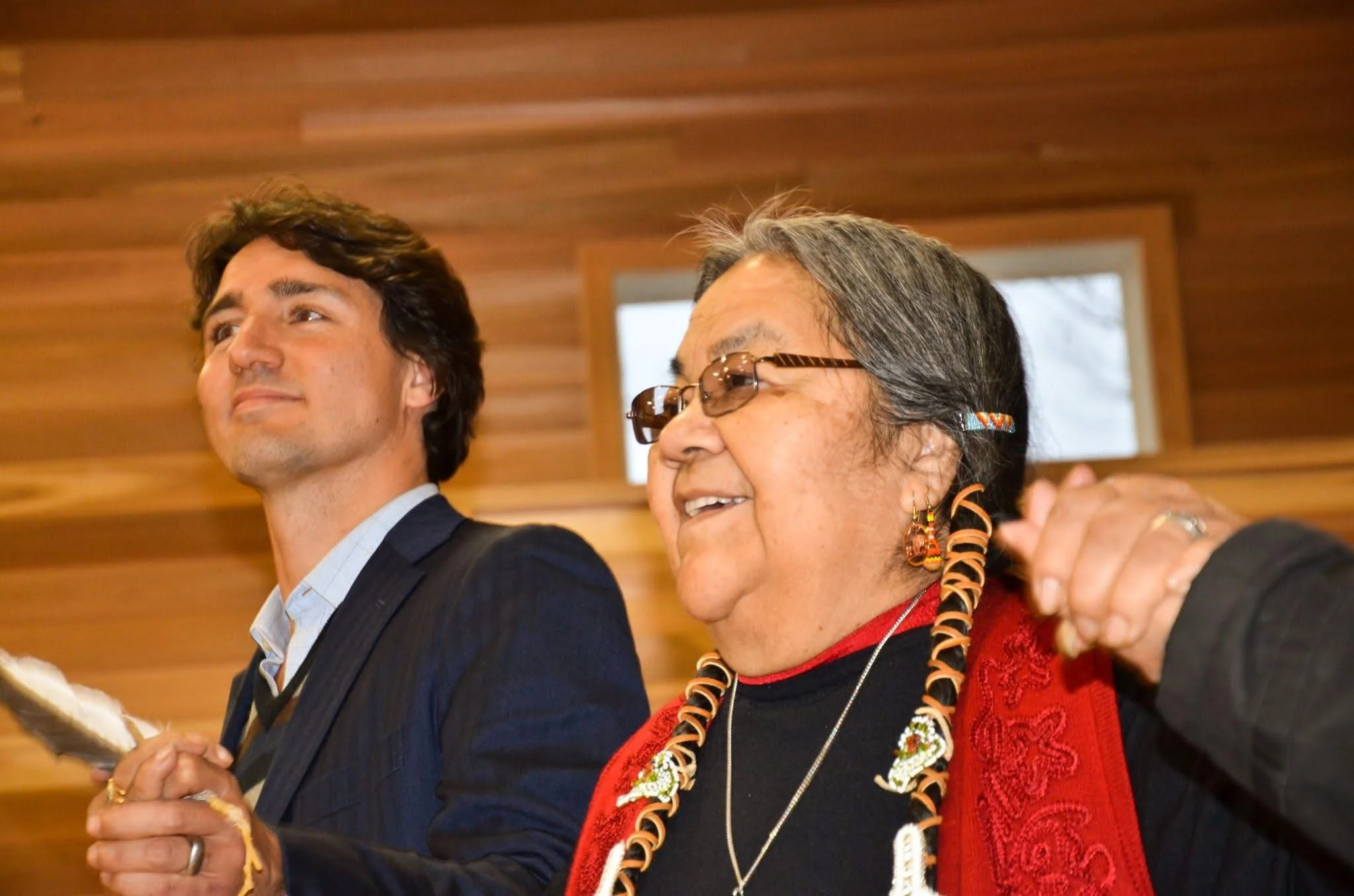
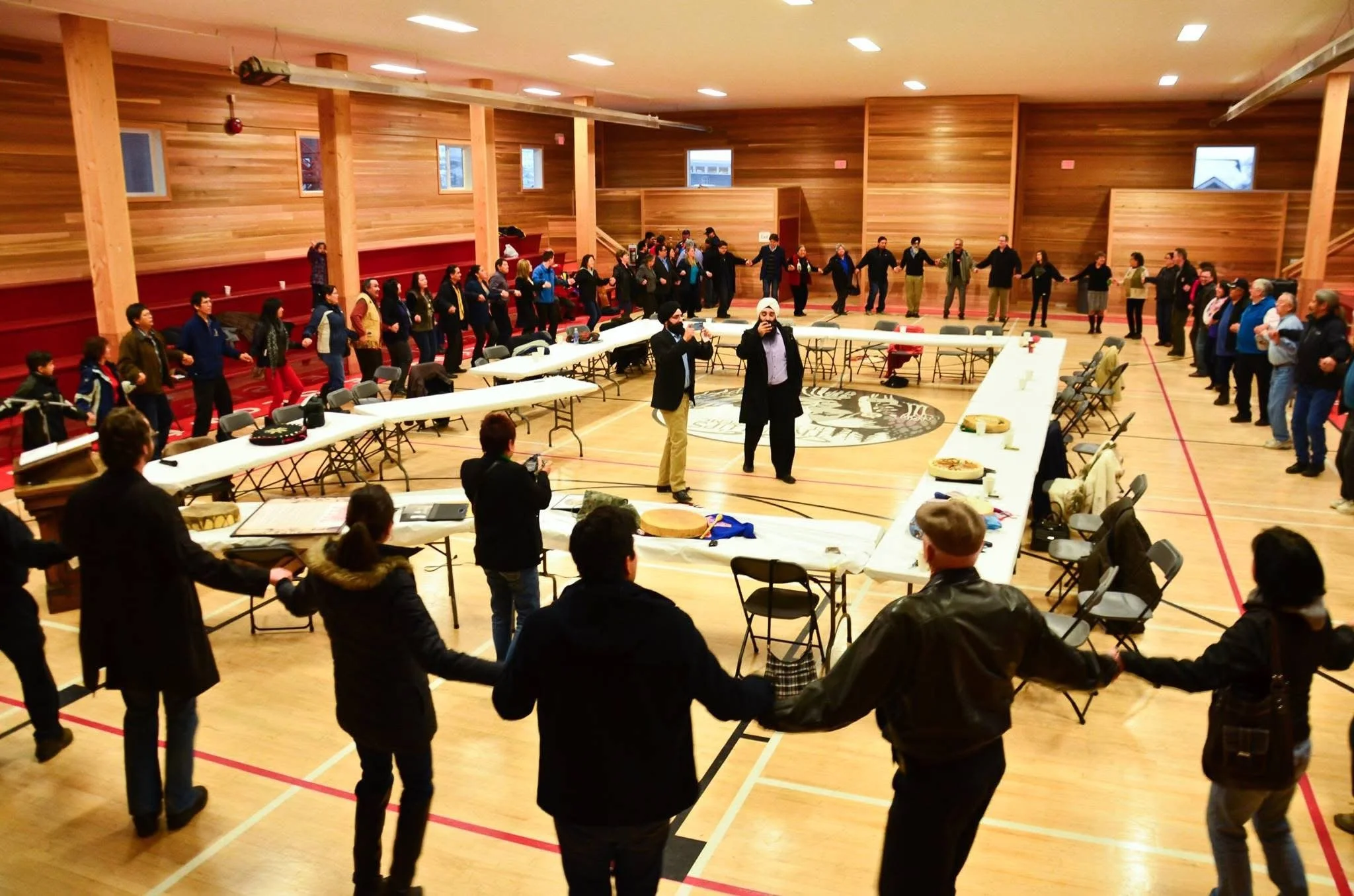
Justin Trudeau joins Rounddance

Speaking with Justin Trudeau
Reconciliation and the new generation
The Truth and Reconciliation Commission of Canada was established in 2008 and, after hearing testimonies from more than 6,500 survivors and witnesses, released its final report and 94 Calls to Action in December 2015. The Calls to Action demanded reforms across education, child welfare, justice and public service training and urged Canada to adopt the UN Declaration on the Rights of Indigenous Peoples. Since 2015, the federal government reports that more than 85 % of the calls requiring federal leadership are completed or underway. Legislation has been passed to support Indigenous languages, child and family services and the National Day for Truth and Reconciliation. Despite this progress, reconciliation is far from complete. In recent years, nationalist rhetoric has resurged. Political leaders have minimized consultation obligations, implying that Indigenous “consultation is mere suggestion.” Statements like these not only misrepresent the law, which requires meaningful consultation and accommodation, but also inflame tensions.
A new generation of Indigenous leaders has grown up during a period of relative funding stability. Many have not had to fight for every dollar. Yet the political climate is shifting. As economic pressures increase and some politicians promise to “get resource projects built no matter what,” Indigenous peoples must be ready to reassert their rights. The Canadian Constitution protects the right to fair and “hard‑nosed” negotiation; courts have reiterated that strong positions and even refusing projects are legitimate forms of bargaining, not unlawful vetoes. Legal certainty will not be handed to us, it will be earned through continued vigilance, negotiation and, when necessary, direct action.
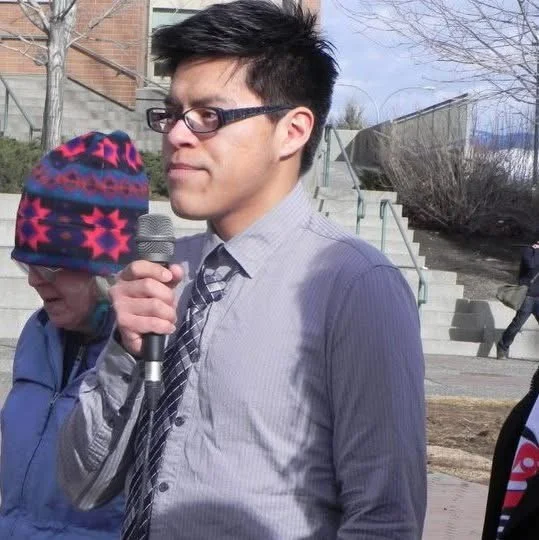
Speaking at an IdleNoMore gathering at TRU
Moving forward: Idle no more
Thirteen years after Idle No More, many of the issues that ignited the movement remain unresolved. Governments still introduce omnibus legislation affecting Indigenous rights without proper consultation, and extractive industries continue to push into unceded territories. But the landscape has also shifted. Historic Supreme Court decisions, landmark agreements like the Wet’suwet’en MOU and the growing implementation of Indigenous law have expanded Indigenous authority. Each blockade, each court case and each negotiation builds a body of law and practice that future generations can rely upon.
When politicians suggest that Indigenous rights must be suppressed so others can enjoy theirs, we must respond with unity and determination. Indigenous statecraft teaches that diplomacy and negotiation are essential, but they work best when backed by the willingness to act. Whether it is blocking a highway, creating our own forestry plans or taking a case to the Supreme Court, direct conflict can open the door to lasting legal certainty. The path ahead will require courage and creativity, but as our history shows, we are more than capable of shaping our future.